
Making Tax Digital is one of the biggest tax changes for self-employed people in the UK in many years. With the introduction of MTD for self employed, sole traders will see major changes in how they report income and maintain digital records.
If you are a sole trader, this will affect how you report your income to HMRC. It will change the way you keep records and how often you send updates.
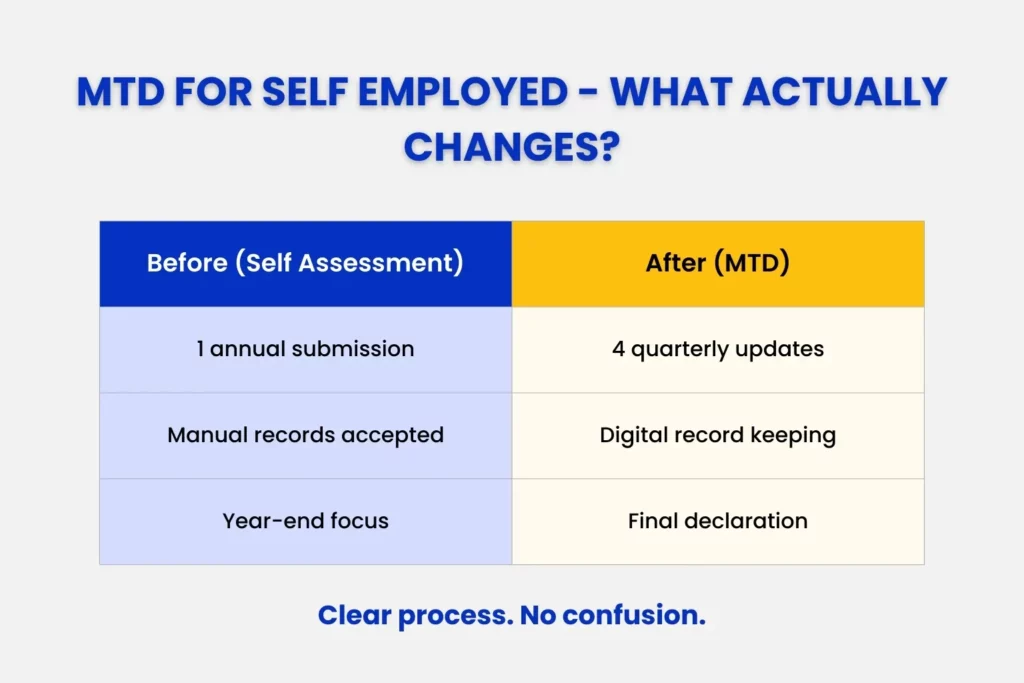
For many people, Self Assessment has always been a once a year task. Under MTD, it becomes a four-times a year process.
This guide explains what is changing, who it applies to, and what you need to do before April 2026.
Understanding Making Tax Digital for Self Employed People
Making Tax Digita (“MTD”), is HMRC’s move towards a fully digital tax system.
Under MTD for Income Tax, self employed people will need to:
- Keep digital records of income and expenses
- Submit quarterly updates to HMRC
- Complete an end of year final declaration
This replaces the traditional Self Assessment return as we know it. For many sole-traders, the glory days of a tax return once a year are coming to a rapid end. See below for who exactly is affected by these changes.
The goal of MTD is to reduce errors and improve accuracy of reporting to HMRC. It also means HMRC will receive information more regularly instead of once per year. This will help HMRC match income information to other systems, for example the Universal Credit database.
Who Must Comply and How to Calculate Your Qualifying Income
MTD applies based to your gross income, not your profit (ie your business turnover).
Qualifying MTD income includes income from:
- Self employment as a sole trader
- Partnership income
- Property rental income
If your total gross income from these sources is over £50,000, MTD will apply from April 2026.
If your income is over £30,000, it will apply from April 2027.
Gross income means turnover before expenses. This catches some people out. Also, it does not matter how many businesses you have. HMRC looks at the combined total.
If you are close to the threshold, it is worth reviewing your figures early.
MTD Changes Reporting, Not Payment Deadlines
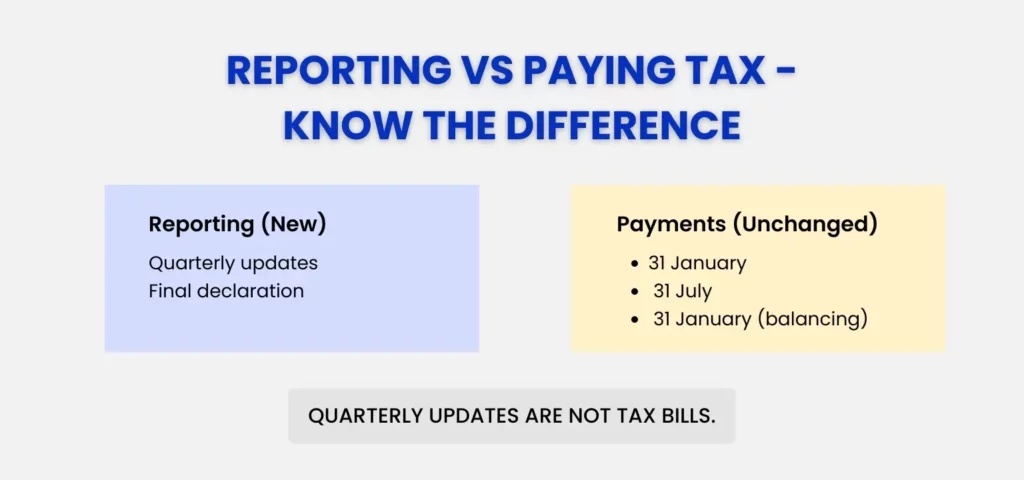
One key point many sole traders misunderstand is over tax payment deadlines. MTD only changes how often you report to HMRC – it does not change when you have to pay your tax.
Quarterly updates are reporting submissions only. They are not tax bills. You are not required to make a tax payment every quarter just because you submit an update.
Tax payment deadlines remain the same. Payments on account are still due on 31 January and 31 July. Any balancing payment is still due on 31 January following the end of the tax year.
MTD increases the frequency of reporting, but the tax payment timetable does not change.
How to Choose the Best MTD Compatible Software
MTD requires compatible software. HMRC will not accept manual submissions through the old online portal.
You will need software that can:
- Keep digital records
- Send quarterly updates
- Submit the final declaration
Some sole traders use spreadsheets. These can still be used, but only if linked to bridging software that allows digital submission.
When choosing software, consider:
- Ease of use
- Cost
- Support and training
- Whether it suits your type of business
- Whether it connects to your bank account
The best choice depends on how simple or complex your finances are.
Starting early gives you time to get comfortable before MTD becomes mandatory.
Read our guide on MTD Compatible Software to look at full-suite software options & bridging tools.
Step by Step Preparation for MTD Before April 2026
The best way to prepare is to start now, not next year.
Here is a practical approach.
First, check your income level. Confirm whether you will fall into the April 2026 group.
Second, review your current bookkeeping. Paper records will not be enough. Spreadsheets may need bridging software.
Third, choose an MTD compatible system. Do not leave this until the last minute.
Fourth, separate business and personal finances if possible. A business bank account makes record keeping much easier as otherwise you’ll be disentangling personal (non-MTD transactions) away from reportable MTD transactions. Its much easier to keep a dedicated business bank account and not to mix business and personal in the same pot.
Fifth, start keeping digital records now. Even if MTD does not apply until 2027, early preparation makes the change far easier.
Finally, speak to an accountant. MTD affects more than software. It affects how you plan, budget and stay compliant.
Benefits of MTD for Self Employed and Sole Traders
Although MTD brings more admin, there are potential benefits.
It can help sole traders stay organised. Digital records reduce lost receipts and missing invoices.
Quarterly updates can give a clearer picture of income and expenses during the year. This makes it easier to plan for tax bills.
It may also reduce errors, which helps avoid HMRC enquiries.
For some businesses, MTD could be a push towards better financial habits.
Common Pitfalls for Self Employed People and How to Avoid Them
There are a few common mistakes we expect to see.
- Leaving bookkeeping until the last minute.
- Choosing software that is too complex.
- Missing quarterly deadlines.
- Mixing personal and business spending.
- Assuming the rules do not apply.
Another pitfall is misunderstanding qualifying income. HMRC uses turnover, not profit.
Conclusion
MTD for self employed people is coming soon. From April 2026, many sole traders will need to keep digital records and submit quarterly updates to HMRC.
The sooner you prepare, the easier the transition will be.
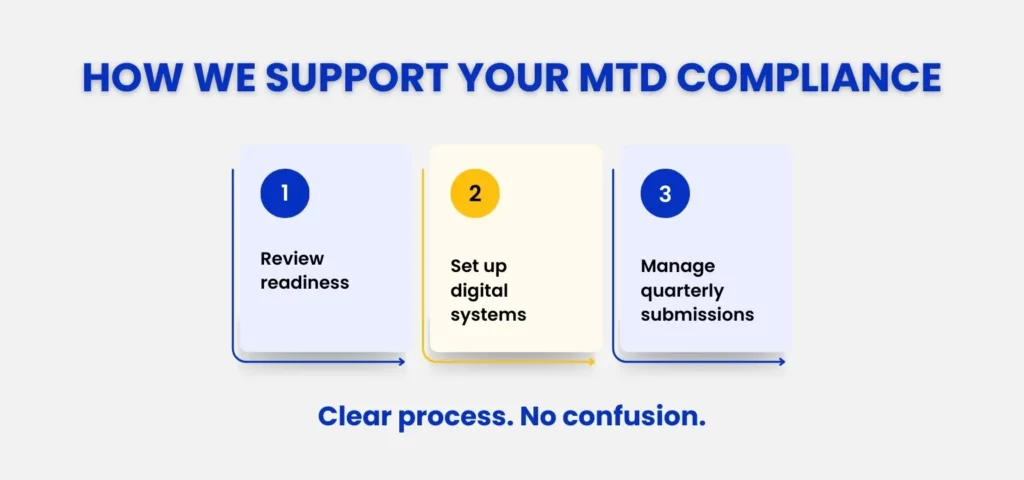
If you want help reviewing your income, choosing software, or getting ready for MTD, we can support you.
Why Choose Julian Hobbs & Co. to Stay MTD Compliant
We help sole traders and small business owners stay compliant without stress.
We explain the rules clearly. We help you choose the right system. We handle submissions and keep you on track.
If you want to feel confident before April 2026, book a call with our team.
People Also Ask:
What counts as qualifying income for MTD?
Gross income from self employment, partnerships and property combined, before expenses.
Do I have to submit four tax updates per year?
You must submit four quarterly updates, but these are reporting updates, not tax payments.
Can I continue using my spreadsheets?
Yes, but only if they link to bridging software like TaxCalc that can submit data digitally to HMRC. Read our MTD compatible software guide to choose from the options.
Do I need a business bank account for MTD?
It is not mandatory, but it makes bookkeeping much easier and helps avoid errors.
What happens if I miss a quarterly update deadline?
Late submissions may lead to penalties once the new penalty system applies.
What counts towards my gross income for Making Tax Digital?
Turnover before expenses, including all qualifying business and property income.
